

In power system maintenance and commissioning, primary injection testing and secondary injection testing are two core methods for verifying the reliability of protective relay systems.
The key difference comes down to test scope and current level. Primary injection testing injects real, high current (ranging from amperes to kiloamperes) into the entire protection circuit, including current transformers (CTs), wiring, relays, and circuit breakers. This simulates an actual fault to verify the collaborative operation of the entire protection chain.
By contrast, the secondary injection test bypasses the high-voltage side entirely. It injects a low-voltage, low-current signal directly into the relay’s terminals to independently verify whether the relay’s own logic and settings are correct.
This article explains the key differences between these two test methods and provides a clear decision guide to help you choose the right test at the right time.
What Is a Primary Injection Test?
Primary injection testing is a “full-link” system-level test. The testing equipment directly injects a powerful current, equivalent to the expected fault current, into the main circuit of the power system. This current typically ranges from tens to thousands of amperes. Its ultimate goal is to simulate real fault scenarios to verify if the entire protection system operates as expected.
Key Features of Primary Injection Testing
- It is the only method capable of verifying the full-link integrity, from the primary side of the CT to the secondary wiring, the relay, and finally the circuit breaker tripping contacts.
- By injecting fault-level current, it gives the most accurate picture of how the system performs under real stress.
- This test requires high-power, bulky primary injection testers (high current generators), making it more time-consuming and costly to carry out.
- Due to the high currents involved, the equipment under test (such as switchgear) must be completely de-energized and safely isolated, which means longer downtime.
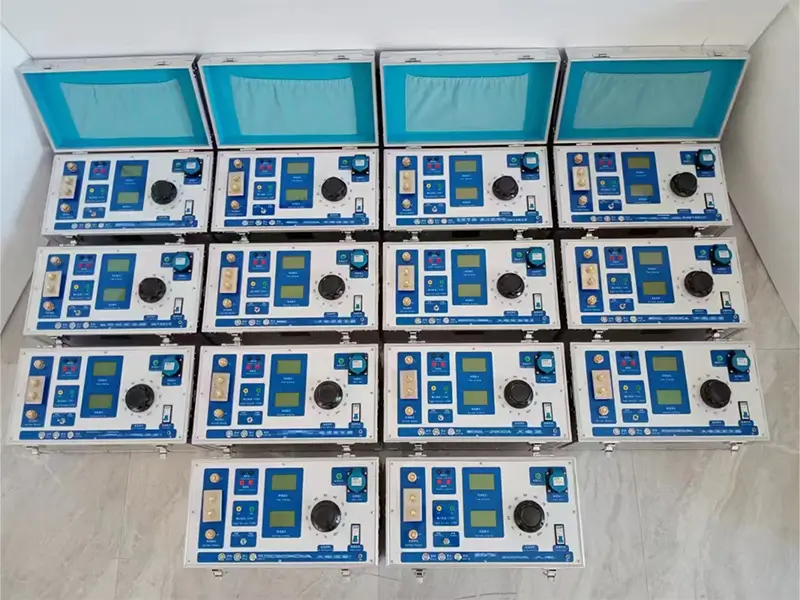
Primary Injection Testing Is Required or Best Suited for These Situations:
Commissioning of New Equipment: Before completely new electrical installations (like substations or switchgear) are put into service, a primary injection test must be performed to ensure the entire protection system is correctly designed and installed.
Verification After Major Modifications: After replacing key components like CTs or circuit breakers, this test is required to confirm that the new and old parts still work together reliably.
Troubleshooting and Root Cause Analysis: When suspecting internal issues within the protection system, such as CT saturation, reversed polarity, or faulty wiring, primary injection is the ultimate way to locate the problem.
What Is a Secondary Injection Test?
Secondary injection test is a component-level, precision test. It bypasses the high-voltage, high-current primary circuit entirely. Testers use portable relay protection test sets to directly inject an accurately controlled low current or voltage signal (typically within the rated range of 1A or 5A) into the secondary terminals of the protection relay.
Key Features of Secondary Injection Testing
- The goal is to accurately evaluate the relay’s settings, such as overcurrent pickup values, time-delay characteristics, instantaneous operating values, and the correctness of the tripping logic.
- Safer, faster, and more economical: Because it only uses low-energy signals, the risk is very low, and long power outages are avoided. The lightweight, portable testing equipment greatly improves on-site work efficiency.
- Does not test CTs or primary circuits: This is its biggest limitation. Secondary injection testing cannot detect faults within the CT itself (such as magnetic saturation or polarity errors) or wiring issues between the primary and secondary sides.
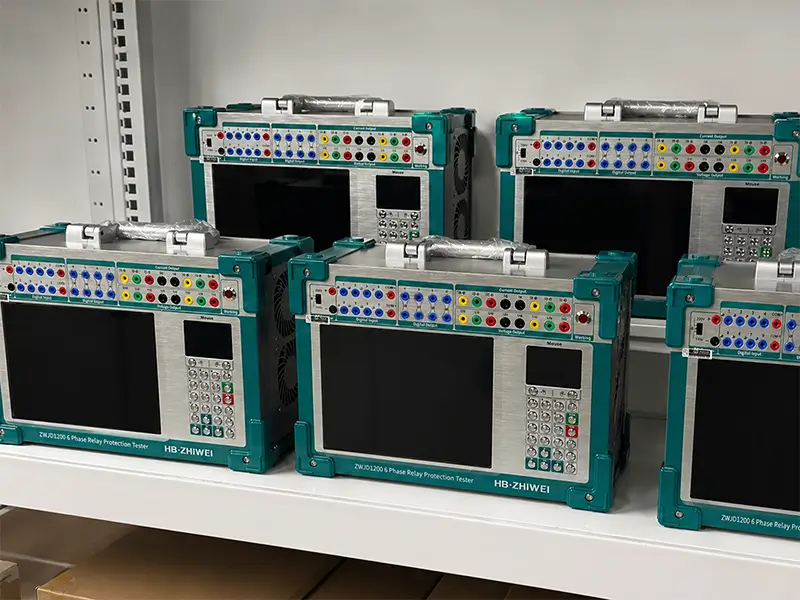
Secondary Injection Testing Is the Preferred Choice for Routine Maintenance:
Annual or Semi-annual Routine Maintenance: Used to quickly verify that the relay’s functions still meet the set values, ensuring it remains in a healthy condition.
Relay Troubleshooting: When a fault or setting drift is suspected within the relay itself, secondary injection can quickly isolate and diagnose the problem.
Verifying Complex Protection Schemes: Useful for verifying complex differential or distance protection logic without putting stress on the main equipment.
Quick Comparison Table: Primary vs. Secondary Injection
| Feature | Primary Injection Test | Secondary Injection Test |
|---|---|---|
| Test scope | Entire protection chain (CTs, wiring, relays, breakers) | Only the protection relay and its internal logic |
| Current Level | High current (simulating real fault current) | Low current (signal injected at relay terminals) |
| Equipment | Large, heavy, high-power test sets | Small, lightweight, portable relay testers |
| Main objective | Verify full-system response under real faults | Check relay functions, timing, and trip settings |
| Risk and Downtime | Higher risk, requires full power outage and isolation, longer downtime | Very low risk, safer, faster execution |
| Frequency of Use | Commissioning and deep maintenance every 3-5 years | Annual or semi-annual routine preventive maintenance |
Which Test Should Be Done First?
In standard maintenance and commissioning workflows, engineers usually don’t choose “one or the other”. Instead, they perform them as complementary steps:
Step 1: Perform the secondary injection test first.
This can quickly isolate any problems with the relay itself (such as setting errors or logic board faults). If the relay fails the secondary test, there is no need to proceed with the more complex, higher-cost primary injection test, saving significant time and effort.
(For more details on relay protection testing, you can refer to our article on [Principles and Applications of Relay Protection Testers]).
Step 2: Proceed with the primary injection test.
After passing the secondary test and confirming the relay works correctly, a primary injection test is performed. This ensures the integrity and correctness of the whole protection path (especially the CTs and associated wiring), ultimately confirming that the system can operate reliably under an actual fault.
EXPERT GUIDANCE
Need Help Choosing the Right Testing Equipment?
FAQ of Primary and Secondary Injection Tests
1. Can secondary injection testing completely replace primary injection testing?
Absolutely not. While secondary injection can verify if the relay is normal, it cannot detect critical issues like reversed CT polarity, damaged CT windings, loose primary wiring, or mechanically jammed circuit breakers. Only primary injection testing provides the ultimate confidence guarantee for the entire system.
2. Since primary injection testing is more comprehensive, why not use it for every routine maintenance check?
Although primary injection testing provides the most complete full-link verification, it requires the equipment to be completely de-energized and isolated. This means longer downtime and higher testing costs.
Furthermore, frequent high-current testing could accelerate the wear of large mechanical components like circuit breakers.
The most scientific and cost-effective operational strategy is to combine them: use the lightweight and fast secondary injection test for regular health checks, and reserve the primary injection test as the ultimate verification tool when commissioning new equipment, after major repairs, or for a deep inspection every 3-5 years.
Protect Your Power System Safety with ZHIWEI Equipment
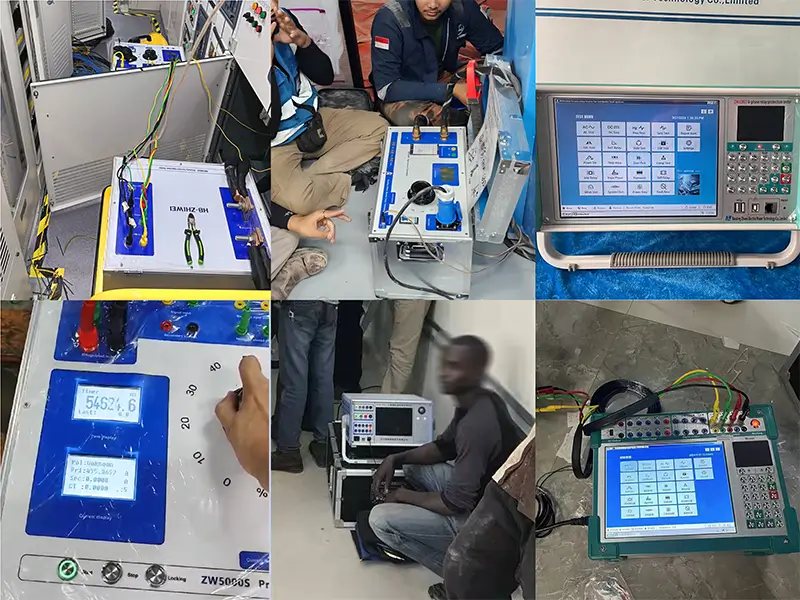
Whether you need a relay tester for routine checks or a high current generator for system acceptance, ZHIWEI can provide the perfectly matched solution for you.
Official Website: zwpowertest.com
Email: sales001@zhiweielectric.com
WhatsApp: +8613833237336
Explore ZHIWEI’s full range of primary and secondary injection testing equipment, or contact our technical team for a customized product recommendation.