
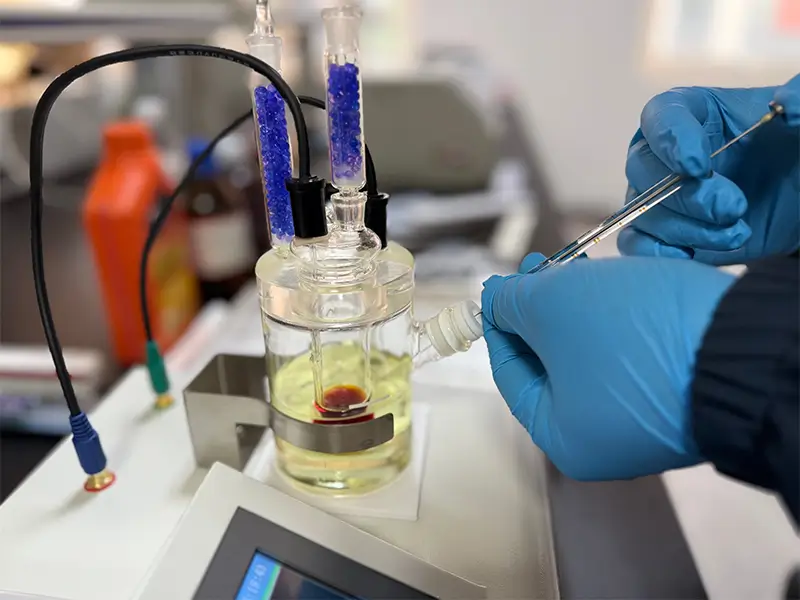
In the daily operation, maintenance, and asset management of transformers, oil analysis is an essential diagnostic tool. However, interpreting a professional oil chemical report requires looking beyond a single parameter.
Field engineers and laboratory technicians often encounter a confusing situation: the transformer oil test report shows that the moisture content of the insulating oil is very low, but the breakdown voltage (BDV) is also abnormally low. According to basic physics, extremely dry insulating oil should possess exceptional dielectric strength.
When this normal correlation is broken, it usually indicates the presence of specific, easily overlooked contamination inside the transformer. This article will systematically explain how to comprehensively analyze test reports to accurately diagnose such anomalies.

The Low Moisture and Low BDV Paradox: What Exactly is Happening?
If your Karl Fischer moisture titration report shows moisture < 10 ppm (indicating very dry oil), yet the BDV test result falls strictly below the acceptable threshold (e.g., < 30 kV), this sends a clear signal to maintenance personnel: although the insulating oil is dry, other contaminants exist within.
While moisture is undoubtedly a primary factor in reducing a transformer’s dielectric strength, it is not the only one. Breakdown voltage (BDV) essentially measures the insulating oil’s ability to resist initiating a discharge under an alternating electric field.
Besides moisture, solid suspended particles and polar chemical impurities in the oil can also align directionally under the polarization of an electric field. They cross the electrode gap to form a “conductive bridge”, causing the oil to break down prematurely at voltages well below the safety threshold.
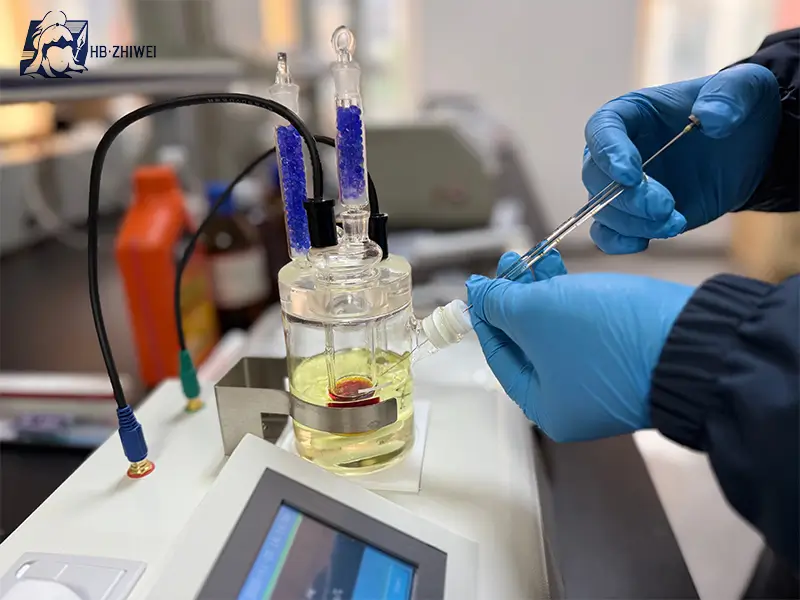
Three Hidden Factors Leading to Decreased Breakdown Voltage (BDV)
Once the report rules out “excessive moisture” as a variable, we need to shift our diagnostic focus to the following three often-overlooked triggers.
1.Conductive Particles (Carbonized particles, metal dust, cellulose)
Even in a completely water-free state, minute suspended particles in the oil (such as aged paper insulation fibers, free carbon from early partial discharges, or metal dust from pump gear wear) are easily polarized in an electric field.
They quickly cluster toward high-field-strength areas and interconnect, forming a physical conductive pathway between the test electrodes. This explains why even a small number of conductive particles is enough to cause flashover failure in dry insulating oil at low voltages.
During troubleshooting, initially observe if the oil sample has lost transparency, become cloudy, or darkened. If necessary, conduct an exact verification using oil particle counting according to ISO 4406 or NAS 1638 standards.
2.Polar Impurities and High Acidity (Equipment aging by-products)
Over the long-term operation of a transformer, insulating oil undergoes chemical oxidation under the influence of heat and oxygen, generating organic acids, soluble sludge, and polar compounds. These chemical derivatives inherently possess weak conductivity and strong polarity.
This chemical degradation severely weakens the insulating oil’s barrier capacity, which not only lowers the BDV but also leads to a significant increase in the dielectric dissipation factor (Tan Delta).
To address this, checking the Interfacial Tension (IFT) indicator in the report is highly effective. If the IFT drops below 25 mN/m, it can be concluded that a large number of polar sludge precursors already exist in the oil.
3.Entrained Micro-bubbles During Sampling
This is a false-positive fault caused by human error. If micro-bubbles are mixed into the oil sample during extraction or transportation and are not fully released before testing, the data will be severely affected. Because the dielectric strength of gas is much lower than that of mineral insulating oil, discharges during pressurized testing will typically break down the bubbles first, resulting in a falsely low BDV reading from the instrument.
To avoid this, it is mandatory to let the oil sample rest in the testing cup for 15-30 mins before the test to fully degas.
Cross-Diagnostics of Oil: How to Conduct Comprehensive Indicator Analysis
To accurately assess the health of transformer oil, relying solely on single-test data is insufficient; engineers need to establish a cross-correlation analysis of multiple indicators.
| On-site Scenario | Moisture (ppm) | Breakdown Voltage BDV (kV) | Acidity / Interfacial Tension (IFT) | Diagnostic Conclusion | Recommended Action |
|---|---|---|---|---|---|
| Healthy Condition | Low (< 15) | High (> 60) | Low Acidity / High IFT | Excellent insulation and chemical status | Maintain routine annual inspection schedule |
| Severe Moisture Ingress | High (> 30) | Low (< 30) | Low Acidity / High IFT | Primary fault source is “free water” | Schedule high-vacuum oil purification and dehydration |
| The “Paradox” Phenomenon | Low (< 15) | Low (< 30) | Low Acidity / High IFT | High-density physical particulate contamination | Perform high-efficiency precision multi-stage filtration (impurity/carbon removal) |
| Terminal Degradation | Low / Medium | Low | High Acidity / Low IFT | Severe chemical aging inside the tank, leading to sludge formation | Must perform physical adsorption regeneration (Fuller’s earth) or complete oil replacement |
Tip: The Easily Overlooked Indicator — Interfacial Tension (IFT)
When dealing with a report showing low moisture but low BDV, interfacial tension is a crucial reference indicator. Many tend to focus only on the voltage withstand data and overlook it. During the early stages of sludge formation, the change in IFT is the most pronounced:
If the IFT remains high (e.g., > 30): This generally indicates that the oil is only physically contaminated (e.g., mixed with carbon dust or paper debris). In this case, performing multiple passes with a high-precision oil purifier can usually restore insulation performance.
If the IFT has dropped to a low level (e.g., < 20): This indicates that the oil has undergone severe chemical degradation. Simple mechanical filtration cannot solve the problem at this stage; you must use adsorption regeneration treatment or directly consider replacing with new oil.
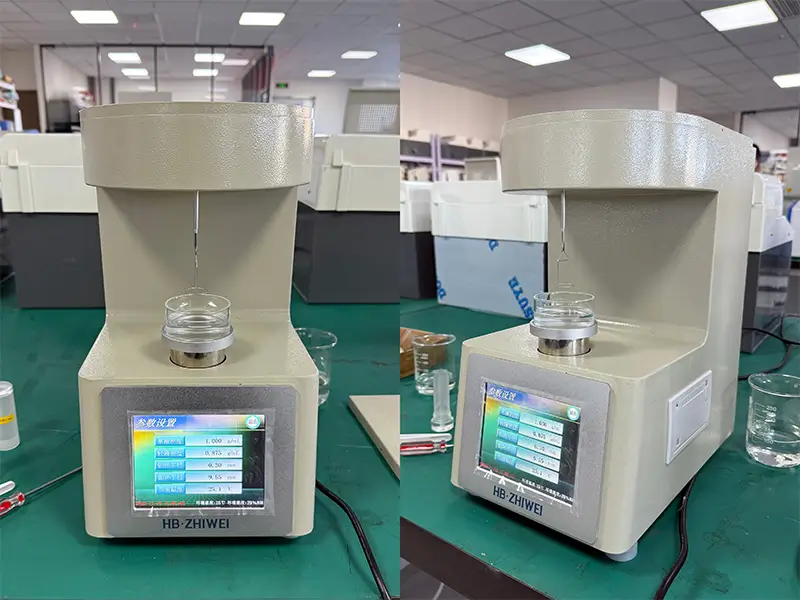
Frequently Asked Questions on Transformer Oil Testing
1. Can improper on-site sampling really cause completely dry oil to yield very low withstand voltage values?
A: Yes. If the sampling bottle is not thoroughly cleaned, or if air is introduced during extraction without the required resting period, the measured BDV will show major deviations. Sampling and testing must strictly follow IEC 60475 and IEC 60156 standards to ensure data validity.
2. Why should dielectric dissipation (Tan Delta) be considered when analyzing the report?
A: The dielectric dissipation test measures the internal energy loss of insulating materials. If the report shows “extremely low moisture” alongside “abnormally high Tan Delta”, it further confirms the presence of abundant polar conductive impurities or aging by-products, serving as key evidence of severe chemical degradation of the oil.
3. What testing frequency should be maintained for insulating oil Breakdown Voltage (BDV)?
A: For main transformers in critical substations, it is recommended to conduct a comprehensive physical and chemical test in conjunction with DGA at least once a year. If the equipment has been in service for over 15 years and carries a heavy load, the testing frequency should be shortened to once every six months to promptly detect signs of insulation decline.
The Need for Multidimensional Data Analysis and Reliable Testing Instruments
When encountering a “low moisture + low BDV” test report, it typically points directly to the intrusion of conductive particles or the accumulation of polar impurities. Blindly using a vacuum oil purifier for dehydration cannot solve the problems of paper fibers and free carbon. Engineers must combine particle count, acid value, and IFT to accurately determine whether the oil suffers from physical contamination or chemical deterioration.
In this process, precise test data is the sole basis for guiding maintenance decisions (such as choosing between simple filtration or total oil replacement). Obtaining unbiased diagnostic results requires relying on testing equipment that meets high standards.
ZHIWEI High-Precision Insulating Oil Testing Solutions
ZHIWEI is dedicated to providing professional and accurate transformer insulation testing solutions. Our series of insulating oil testing equipment (including BDV testers, micro-moisture analyzers, Tan Delta testers, etc.) fully complies with international and national standards such as IEC 60156, ASTM D877 / D1816, and GB/T 507. Through high-precision calibration and anti-interference technology, the instruments can accurately capture the exact moment of discharge, ensuring every test value authentically reflects the insulation status.
Beyond reliable hardware, ZHIWEI’s technical team can provide comprehensive engineering support, from interpreting DGA and oil chemical reports to planning maintenance strategies. If you require higher precision laboratory instruments or professional substation testing solutions, feel free to contact the ZHIWEI technical team.