
For many field maintenance personnel, laboratory procurement staff, and oil analysis technicians, evaluating the aging condition of transformer insulating oil often brings a dilemma when choosing an “acid value tester.” Various rapid testing technologies, such as electrochemical methods, colorimetry, and infrared spectroscopy, continue to emerge on the market.
These new technologies sound highly efficient. However, in rigorous oil sample testing and transnational power grid audits, authoritative oil analysis laboratories worldwide still insist on using the traditional “neutralization titration/extraction method.” Understanding the technical logic behind this not only helps us assess equipment insulation more accurately but also helps us avoid buying flashy but impractical instruments.
This article will deeply analyze the underlying logic of transformer insulating oil acid value testing and explore why the neutralization titration extraction method remains the irreplaceable “gold standard.”
Table of Contents
Core Concepts: The Nature of Aging and the Neutralization Titration Method
To understand the differences between testing methods, we must first define oil aging and testing techniques from a chemical perspective.
The Chemical Nature of Transformer Insulating Oil Aging
Under the long-term combined effects of heat, electric fields, and oxygen, transformer oil undergoes an oxidation reaction during operation. The direct consequence of oxidation is the continuous generation of free organic acids.
These acidic substances not only accelerate the degradation of solid insulation materials (insulating paper) but also corrode metal components inside the equipment, ultimately causing a sharp drop in the flash point and electrical breakdown strength of the insulation system. We usually use the “acid value” (unit: mg KOH/g) to quantify this aging degree.
What is the Neutralization Titration/Extraction Method?
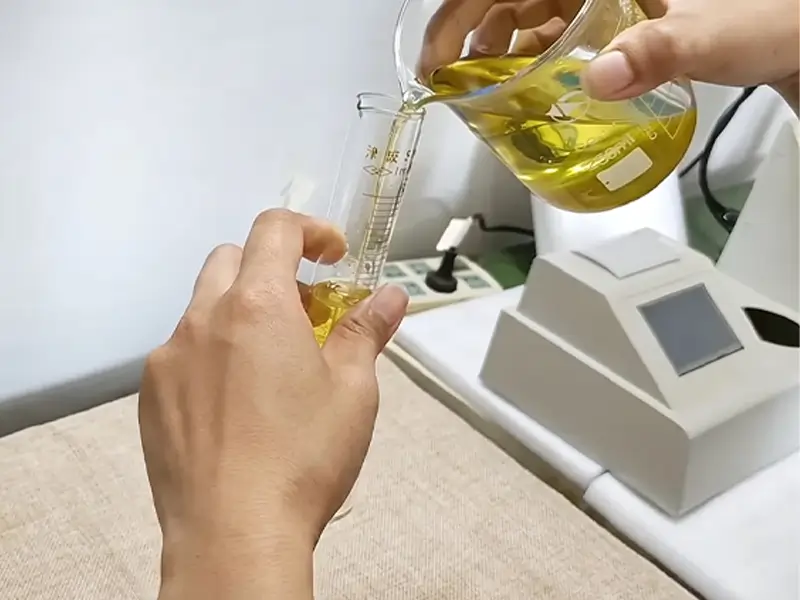
It is a classic method that uses the chemical principle of acid-base neutralization to determine the content of acidic substances in the oil. During the test, we cannot drop an alkaline solution directly into the oil because oil and water do not mix.
Therefore, this method requires first using a specific extraction liquid (such as an isopropyl alcohol and petroleum ether mixed solvent) to “extract” and separate the polar organic acids from the non-polar oil matrix. Then, an alkaline solution of a known concentration (usually potassium hydroxide, KOH) is used for titration until the acid and base are fully neutralized, reaching the endpoint.
Key Comparison: Neutralization Titration Extraction Method vs. Fast Non-extraction Methods
To clearly show why sticking to the extraction method is essential, we have prepared a comparison table of different technical approaches:
| Comparison Dimension | Neutralization Titration Extraction Method | Direct Non-extraction / Fast Method |
|---|---|---|
| Testing Principle | Titration after polar liquid-liquid separation and extraction using isopropyl alcohol and petroleum ether. | Direct colorimetric or potentiometric measurement in a mixed system. |
| Standard Acceptance | Absolutely compliant; the foundation of mainstream international standards (ASTM/IEC). | Low industry acceptance; mostly used for rough screening. |
| Resistance to Discolored Oil | Extremely strong. Physical separation removes the interference of dark-colored oil on endpoint determination. | Extremely weak. Dark-colored, severely aged oil samples cause extremely poor light transmission, leading to highly distorted results. |
| Audit Traceability | High. Offers the highest legal validity of data and third-party recognition. | Lower. Often used only as an internal supplementary reference. |
As the table shows, for serious industrial insulating oil testing, the neutralization titration extraction method holds an overwhelming advantage in stability and anti-interference capability.
EXPERT GUIDANCE
Need Help Choosing the Right Testing Equipment?
Core Advantages of the Neutralization Titration Method in Oil Testing
Why do senior laboratories still consider the neutralization titration method the baseline in today’s flood of testing technologies? The fundamental reason is that it solves the critical pain points of testing severely aged oil samples.
1. Perfect Match with International Power Grid Standards (ASTM/IEC)
In strict power grid maintenance and third-party oil testing, data results cannot be compromised. The neutralization titration method has maintained its dominance for so long because it strictly follows mainstream international standards like ASTM D974 and IEC 62021-2 Test reports based on these standards carry the highest legal protection and industry recognition globally.
2. The Superiority of Physical and Chemical Separation (Unaffected by Severely Darkened Oil Samples)
This is the method’s core advantage. When a transformer is overloaded for a long time or severely aged, the oil often changes color, becoming deep or even perfectly black (Dark-colored). Under such extreme conditions, non-extraction methods fail because the cloudy oil sample disables the photometer or poisons the electrode. However, the extraction method uses physical properties to draw the organic acids into a clear reagent layer. This entirely prevents the dark oil body from interfering with the endpoint color or potential determination, showing exceptional distinction stability and consistency.
Shortcomings of Traditional Operations and Modern Technological Innovations
Although the principle of the neutralization titration method is flawless, traditional manual operations have many drawbacks:
First, accuracy is highly vulnerable to environmental interference. CO2 in the air easily dissolves into manual titration reagents, causing slight deviations in the results.
Second, efficiency is incredibly low. Manual liquid preparation, shaking, and titration not only waste significant man-hours, but operators must also frequently handle volatile organic solvents (like petroleum ether), which poses health risks.
This is exactly why modern laboratories urgently need to combine the “traditional gold standard” with “modern fully automatic instruments.”
Overcoming Traditional Shortcomings: ZWYG-3’s Innovative Practice
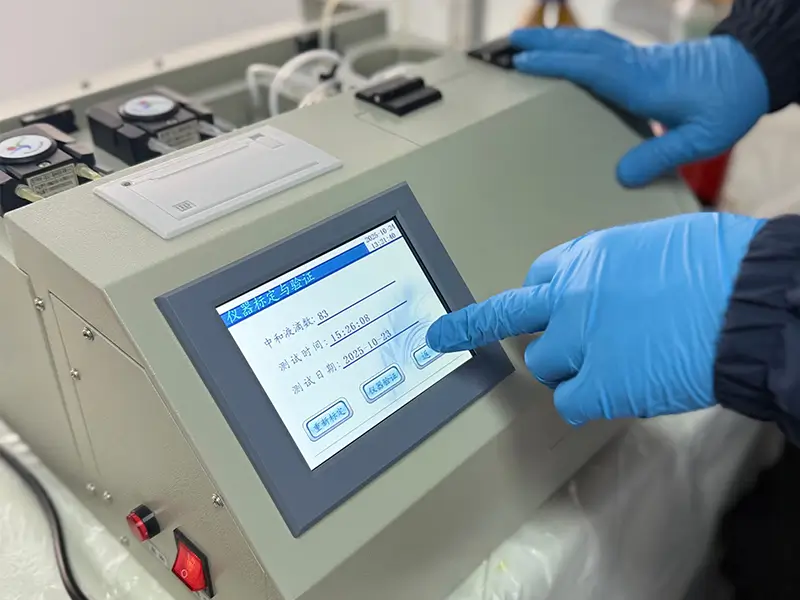
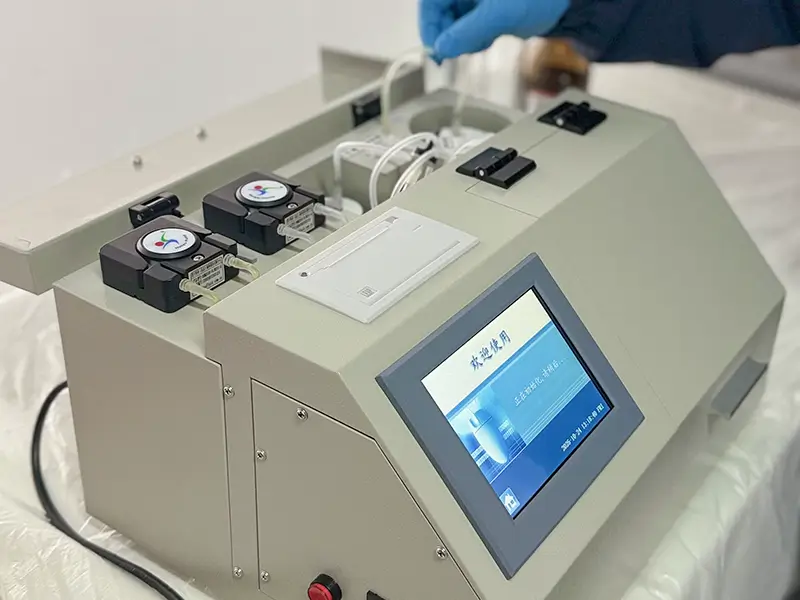
In insulating oil acid value testing, traditional manual titration has long struggled with high environmental interference, tedious procedures, and easily degraded reagents. The ZWYG-3 Automatic Acid Value Tester features a series of innovative designs that perfectly overcome these operational flaws, bringing a brand-new experience to the laboratory.
1. Accuracy Challenge: Enclosed Protection Against Environmental CO2 Interference
In traditional manual titration, highly alkaline neutralizing liquids easily absorb CO2 from the air, triggering minor chemical reactions (like forming K2CO3), which causes errors in endpoint determination and test results.
To thoroughly solve this, the ZWYG-3 uses a fully enclosed liquid circuit system. The instrument is innovatively equipped with a dedicated Washing Solution (KOH) absorption tower. This gas washing system, prepared with high-purity KOH and deionized water, effectively filters and absorbs CO2 and other acidic impurities from the air entering the liquid circuit.
This double physical and chemical isolation creates an absolutely pure testing environment for reagents and reaction cells, ensuring that measurement errors are kept extremely low (≤±0.005mg KOH/g).
2. Efficiency Revolution: Simplified “One-click Start”
Traditional acid value testing requires manual, time-consuming extraction, slow titration, and cleaning procedures, exposing operators to toxic volatile reagents (like isopropyl alcohol and petroleum ether).
The ZWYG-3 brings a true revolution in laboratory efficiency. The system introduces a highly integrated “One-click Start” feature. Users just place the oil samples in the sample tray; the instrument then automatically handles cup searching, precise extraction liquid injection (drawing 10ml mixture each time via a high-precision peristaltic pump), blank value deduction, titration reaction, result printing, and finally, automatic pipeline cleaning and shutdown.
Moreover, the instrument can test 1 to 3 cups simultaneously. A single start can continuously complete the measuring process for multiple oil samples. This innovation not only maximizes operator safety but also slashes manual laboratory workloads for such tasks by over 70%.
3. Calibration Closed-Loop: Ensuring Absolute Reliability for Every Titration
Titration liquids (ethanol-KOH neutralizing solution) often experience slight concentration degradation during long-term storage or use. This is an unavoidable physical and chemical occurrence for all titration instruments.
The ZWYG-3 creatively features a built-in calibration closed-loop system. As stated in the manual, the system comes with a specific Standard Acid Solution (0.15mol/L) (an aqueous solution of potassium hydrogen phthalate) and matching self-calibration procedures.
When the neutralizing liquid is replaced or the instrument has run for a long time, the user simply injects the standard acid via a micro-injector. The ZWYG-3 then automatically performs a neutralization titration calibration, recalculating and updating the actual concentration equivalent of the titrant. This “closed-loop self-verification” mechanism completely eliminates the impact of baseline changes in neutralizing and extraction liquids, ensuring that even if the titrant concentration slightly shifts, the final acid value results remain absolutely reliable.
Interpreting Transformer Oil Acid Value Data (With Reference Table)
How should field maintenance personnel read acid value data after receiving a lab report? Here are the general reference standards for transformer insulating oil acid value (Unit: mg KOH/g):
| Acid Value (mg KOH/g) | Oil Condition Judgment | Recommended Maintenance |
|---|---|---|
| < 0.015 | New oil / Excellent condition | The insulation system is running perfectly. Retest on the regular schedule. |
| 0.015 - 0.03 | Good condition, minor initial oxidation | Within safe operating limits. Maintain normal monitoring frequency. |
| 0.03 - 0.10 | Marginal condition, obvious aging | Insulating paper may have suffered acid erosion, accelerating aging. Close monitoring is advised. Prepare for oil filtering and regeneration. |
| > 0.10 | Severe deterioration | High risk of sludge formation blocking heat dissipation. Immediate shutdown for oil replacement or deep deacidification regeneration is required. |
Note: Transformers of different voltage levels have different tolerances for acid value. Standards for ultra-high voltage grids above 500kV are much stricter. For actual operations, please follow your national or regional power grid regulations.
Frequently Asked Questions (FAQ)
Q1: Can fully automatic acid value testing equipment test oils other than transformer oil?
Professional insulating oil acid value testers are specifically designed to meet power grid maintenance standards (precise titration of micro-trace acids). The internal extraction logic is optimized for insulating oil. Therefore, it is generally not recommended for testing heavily oxidized, high-viscosity industrial lubricating oils or waste diesel.
Q2: How often should the isopropyl alcohol-petroleum ether extraction liquid be prepared?
It should be sealed and stored away from light according to the instrument manual. Preparing it fresh before use is best. To ensure high precision, we recommend using the advanced instrument’s “Blank Titration” function regularly to test and deduct the extraction liquid’s background value.
Q3: How do these precise titration devices perform in high-altitude or high-temperature areas?
High-quality automatic testers feature fully enclosed pipeline designs with a broad operating range of 10°C to 45°C. Changes in air pressure or temperature will not affect the titration metering inside the sealed system, making them perfectly suitable for high-altitude regions.
Q4: Why do technical specifications frequently mention the 500kV transformer threshold?
The massive insulation systems of 500kV and above ultra-high voltage equipment are extremely sensitive to minute oil deterioration (like acid value fluctuations of a few parts per million). This requires testing instruments to achieve extremely low detection limits (e.g., 0.002mg KOH/g) to meet the maintenance standards of ultra-high voltage equipment.
Why Choose Us: Beyond the Product, Long-Term Service Matters Most
For applications like acid value testing that demand high precision, stability, and strict standard compliance, the equipment itself is only the foundation. What truly impacts the user experience is whether the supplier offers perfect technical support and continuous service.
Located in the Baoding National High-tech Industrial Development Zone, China, Baoding Zhiwei Electric Power Technology Co., Ltd. has been deeply engaged in the power testing industry for over 20 years. We focus on the R&D, production, sales, and service of automated testing equipment for power systems, offering customers a one-stop service from solution consultation and equipment selection to post-sales support.
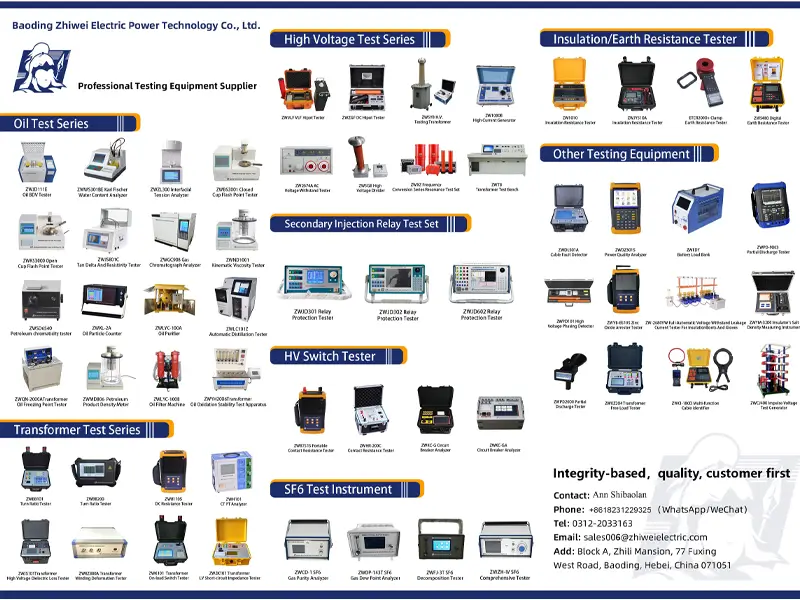
Our products are widely used in power grids, railways, research institutes, petrochemicals, power plants, transformer manufacturing, and electrical installation sectors. We also serve multiple overseas markets and can meet testing needs and application standards across various scenarios.
When it comes to after-sales service, we always maintain a customer-centric approach, providing:
– 1 year warranty
– Lifetime technical support
– Remote guidance and usage Q&A
– Operation training and application assistance
– Continuous after-sales follow-up and service support
If you are looking for a stable, compliant, and easy-to-maintain acid value testing solution, please feel free to contact us anytime. We provide not just relevant equipment but also long-term reliable technical services to help you complete your oil testing work with total peace of mind!