
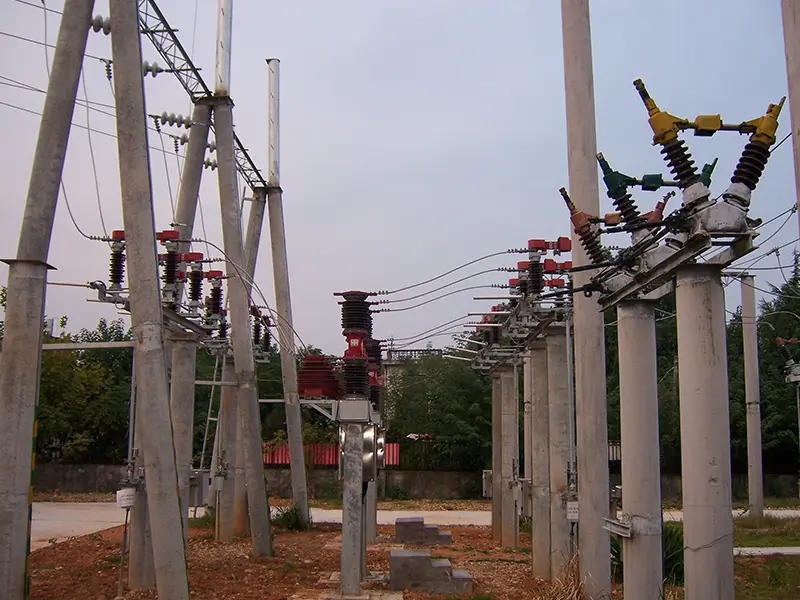
In standard power engineering, transformer no-load and load tests are generally viewed as routine pass/fail procedures during Factory Acceptance Testing (FAT).
However, for grid operators, senior procurement managers, and power asset managers, these tests are far more than mere compliance checks; they are core tools for both financial auditing and deep fault diagnosis. Basic testing only verifies whether a transformer can operate normally. Only by introducing high-precision loss testing and analysis can one accurately grasp the equipment’s true manufacturing quality, long-term profitability potential, and latent hidden defects.
This article goes beyond basic operational guides to explore the core value behind transformer loss testing from the perspectives of economic benefits, on-site technical challenges, and deep equipment diagnosis. It aims to provide a professional analytical and practical framework for the intelligent management of power assets.
The Economics of Energy Efficiency: Why a 0.1% Difference in Loss Matters
The core value of a high-precision loss tester is never just about meeting standard compliance. More importantly, it allows enterprises to accurately calculate the Total Cost of Ownership (TCO) of transformer equipment, serving as a critical basis for rational investment decisions in power infrastructure.

The Long-Term Financial Impact of Capitalized Losses
Some transformers may appear to have a lower upfront purchase price but suffer from high no-load losses (iron losses). Such equipment is actually a long-term financial burden for enterprises. No-load losses are continuous and round-the-clock; regardless of whether the transformer is operating with a load, these losses occur continuously throughout the year, translating directly into persistent power waste and increased operational costs.
If a transformer has an extra 100W of no-load loss, it will cause tens of thousands of dollars in power waste over its 30-year lifespan. During actual procurement, a loss tester can accurately verify whether the manufacturer has met the contracted energy efficiency ratings. If the tested loss value is 15% higher than what is stated in the product manual, the transformer should be rejected or the terms renegotiated—because its lifecycle operating costs will far exceed any savings made on the initial purchase price.
For asset managers, identifying this subtle 0.1% difference is the key to optimizing the TCO of power assets and avoiding hidden cost risks in the supply chain right from the source.
The Low Power Factor Trap: Why Standard Meters Frequently Fail
During on-site testing, technicians often struggle with wildly fluctuating test data on large-capacity transformers. The root cause of this phenomenon is almost always the low power factor (cosφ) issue—one of the most challenging pain points in high-precision loss measurement.
When conducting no-load tests on large-capacity transformers, the power factor is typically extremely low, often below 0.1 or even under 0.05.
This extreme condition directly exposes the inherent flaws of standard testing instruments: ordinary power meters and universal multimeters universally suffer from phase angle errors.
When the power factor is 1.0, a slight phase angle error is negligible; but when the power factor drops to 0.05, a mere 0.1° phase deviation can result in a 10% to 20% measurement error, rendering the test data completely unrepresentative of the equipment’s actual performance.
Addressing this challenge, professional testing equipment like the ZHIWEI ZWKZ204 is designed specifically for low power factor (low cosφ) scenarios. Equipped with high-speed sampling and digital phase-locked loop (PLL) technology, it can achieve precise power measurements even in extreme conditions where the phase difference between voltage and current approaches 90°.
This leads to a crucial conclusion: if manual on-site calculations deviate significantly from the manufacturer’s provided data, one should first verify the low power factor accuracy of the testing instrument before questioning the equipment itself.
Capacity Verification: Exposing “Nameplate Falsification” in the Supply Chain
In today’s global transformer market, “nameplate falsification” has emerged as a prominent supply chain risk. Some equipment is labeled with a nominal capacity of 630kVA, yet the actual internal core and winding configurations only match specifications for 500kVA. While such equipment may run normally in the short term, it operates under continuous overload and overheating in the long run.
This ultimately leads to premature failure and can cause massive economic losses due to unplanned downtime and equipment replacements, not to mention creating severe safety hazards.
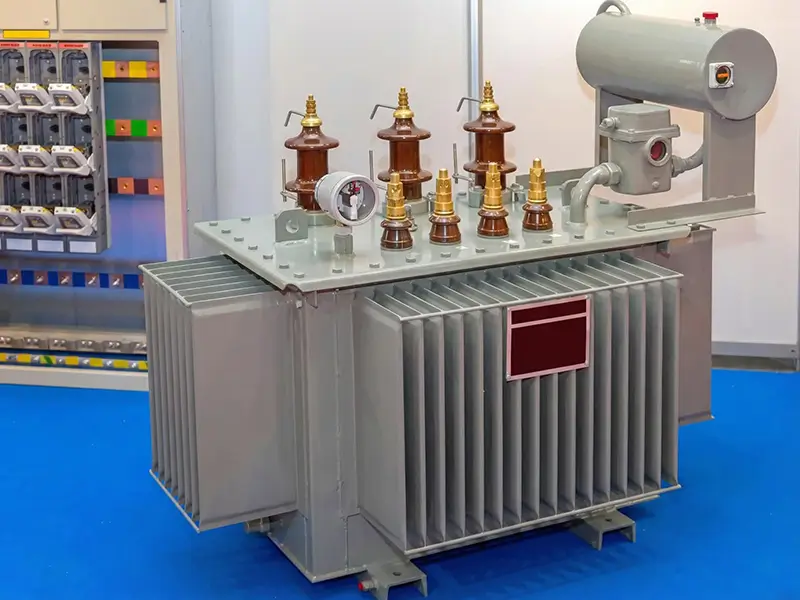
Ordinary multimeters cannot detect this type of fraud. However, professional transformer capacity and loss testers can accurately determine the equipment’s true capacity through either passive testing (requiring no external high-power supply) or active testing. Here, the impedance voltage (Uk%) serves as the core criterion for judgment.
By measuring the short-circuit impedance, the tester can effectively verify whether the internal structure matches the nameplate. If a transformer labeled as 630kVA has an impedance voltage that deviates excessively from the standard value of 4.5%, it strongly indicates a mismatch between the internal build and the nameplate rating.
Integrating this tester into your Incoming Quality Control (IQC) process acts as a “lie detector” within the supply chain, mitigating procurement risks at the source and ensuring the authenticity of transformer capacity and performance parameters.
Advanced Diagnostics: Interpreting Core Health from Harmonic Data
Modern high-end loss testers have moved far beyond simple power measurement, incorporating professional waveform analysis and harmonic detection capabilities. This upgrades transformer fault diagnosis from a simple “qualitative assessment” to “precise fault location.”
Due to the magnetic hysteresis of the iron core, a normal transformer’s no-load current waveform is inherently a distorted, peaked wave. However, abnormal harmonic characteristics often correspond to specific physical defects within the equipment. By analyzing harmonic data, engineers can look past a simple “fail” verdict and pinpoint the exact root cause of the fault.
Correlation Table: Harmonic Characteristics vs. Potential Physical Defects
| Harmonic Characteristic | Potential Physical Defect |
|---|---|
| Excessive Third Harmonic | Excessive third harmonics under core saturation are normal; however, if abnormally high in a delta connection, it indicates poor core joint craftsmanship (presence of air gaps). |
| Significant Even Harmonics (2nd, 4th) | Indicates DC bias or magnetic asymmetry, often caused by residual magnetic fields in the core or a faulty core grounding system (e.g., multi-point grounding). |
| Noticeable High-Frequency Noise | Suggests potential partial discharge phenomena within the equipment’s insulation structure during testing. |
The ZHIWEI ZWKZ204 tester supports analysis up to the 32nd harmonic. With this feature, engineers can accurately differentiate the types of equipment defects—whether it’s due to inferior silicon steel sheets or errors in the manufacturing and assembly process. This targeted diagnostic capability drastically cuts down the time and cost of subsequent maintenance and repair, providing a scientific basis for predicting the equipment’s lifespan.
ZHIWEI ZWKZ204: Transforming Complex Calculations into Automated Workflows
Traditional transformer loss testing is tedious and prone to errors. It involves simultaneously using three independent meters, performing manual calculations, and cross-referencing temperature correction tables for data calibration. A human error at any single step can distort the test results. The whole process is time-consuming and labor-intensive, making it highly unsuitable for large-scale field testing and asset inspections.
The ZHIWEI ZWKZ204 transformer loss tester redefines the efficiency of loss testing. It automatically performs all key corrections required by the IEC 60076 standard, completely eliminating manual operation and eradicating human error at the source:
- Waveform Correction: Automatically compensates for non-sinusoidal distortion errors in grid voltage, accurately distinguishing between average and true RMS voltage to ensure precise power measurement under less-than-ideal grid conditions.
- Temperature Normalization: Automatically converts load loss test data from ambient field temperatures (e.g., 28℃) to standard reference temperatures (options include 75℃, 120℃, or 145℃, depending on the insulation class).
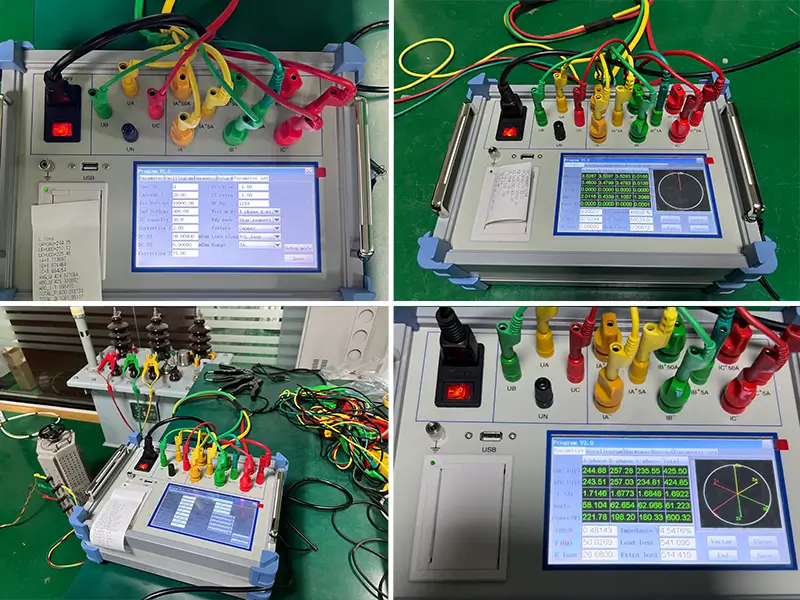
This automated functionality ensures that test data collected in the freezing winters of Russia is completely comparable to data gathered in the scorching heat of Dubai. This provides a unified, standardized data foundation for globalized asset management and cross-regional equipment comparisons.
Advanced Technical Focus: Frequently Asked Questions
1. Why does the no-load loss value displayed by the tester change significantly after just a slight adjustment to the test voltage?
No-load loss is highly sensitive to voltage changes due to the magnetic saturation characteristics of the iron core. The relationship between no-load loss and voltage is roughly proportional to the square (or a higher power).
Because of this, the ZHIWEI ZWKZ204 tester supports generating an excitation characteristic curve. By testing at 90%, 100%, and 110% of the rated voltage, it can perfectly pinpoint the core’s saturation critical point, serving as an important basis for evaluating core material and manufacturing quality.
2. Can the tester identify the material of the transformer windings (copper vs. aluminum)?
Yes, through indirect determination. By measuring the DC resistance of the windings (an integrated feature or supplementary test) and separating the stray losses from the load loss data, an experienced engineer can calculate the winding’s current density.
If a transformer labeled with “copper windings” exhibits abnormally high load losses, there is a high probability that the winding material is actually aluminum. This is an effective method for identifying material substitutions in the supply chain.
3. How should testing be conducted in substations with severe electromagnetic interference?
The strong electromagnetic environment of high-voltage substations can easily induce interference noise on test leads, which undermines data accuracy and introduces safety risks.
The ZHIWEI ZWKZ204 tester features professional digital filtering technology and supports connections to Current Transformers (CT) and Potential Transformers (PT) for electrical isolation. Even in a 500kV high-voltage setting, it elegantly ensures both testing safety and data accuracy.
Data is the core asset of transformer management
Transformers are major capital investments with lifespans stretching up to 30 years. The data intelligence generated by no-load loss testing far exceeds the test itself. Reducing this test to a mere routine check is a sheer waste of data value and a missed opportunity to optimize asset management and enhance Return on Investment (ROI).
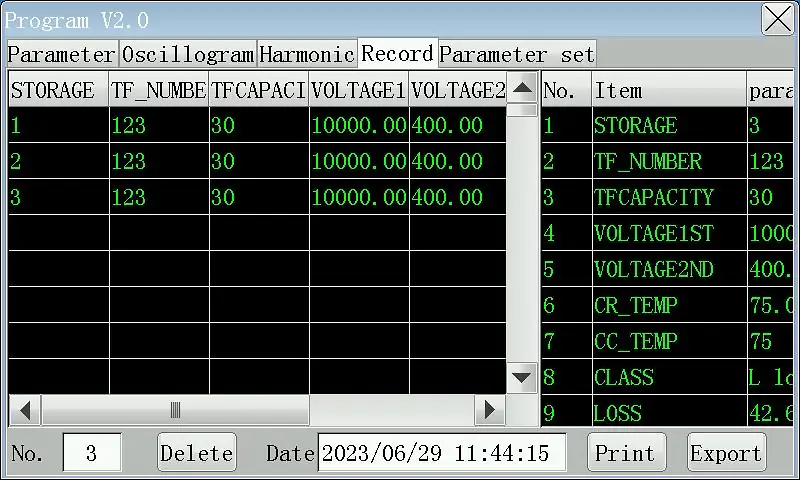
Leveraging the diagnostic capabilities of modern testing equipment like the ZHIWEI ZWKZ204, enterprises can not only execute precise audits on suppliers (identifying nameplate falsification, energy efficiency non-compliance, and material substitution), but they can also proactively predict equipment failures through harmonic analysis and core health diagnostics.
Furthermore, they can quantitatively evaluate the true value of power infrastructure by calculating the lifecycle operating cost. This transformation elevates transformer loss testing from a basic “compliance check” into the central piece of intelligent power asset management.
Are you ready to upgrade your transformer diagnostic capabilities, expose capacity fraud traps in the supply chain, and elevate the precision of your field test data?
Contact the ZHIWEI technical support team today to acquire professional transformer loss testing and asset management solutions tailored exactly for your enterprise!