
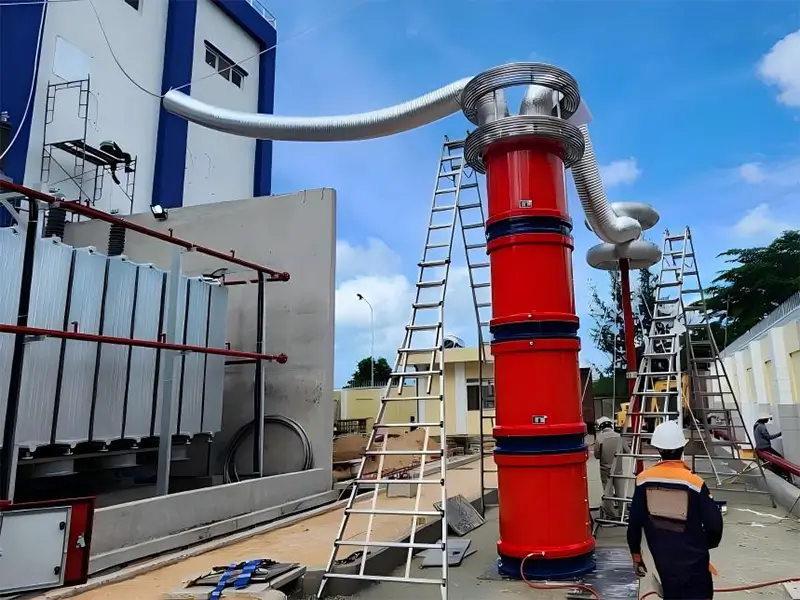
High-voltage withstand testing, as the “gold standard” for evaluating the insulation performance of electrical equipment, is of paramount importance. Among the many testing methods, the variable frequency series resonant test system is becoming an indispensable “health check expert” in the modern power inspection field due to its unique advantages.
What is the magic behind this technology? Why can it guarantee the safe operation of power equipment more accurately and efficiently?
Why is AC Withstand Testing Necessary?
Before delving into variable frequency series resonance, we must first clarify a core question: why do we need to perform AC withstand tests instead of DC?
| Characteristic | AC Withstand Tests | DC Withstand Test |
|---|---|---|
| Voltage Distribution | Distributed by inverse dielectric constant. Closely resembles actual electric fields. | Distributed by direct resistivity. Does not reflect actual operating conditions. |
| Sensitivity to Defects | Very sensitive to concentrated defects (e.g., bubbles, cracks). Easily triggers partial discharge. | Less sensitive. Better for distributed defects (e.g., moisture, aging) via resistance measurement. |
| Simulation Ability | Perfectly simulates grid conditions, including lightning and switching surges (transient high voltages). | Ineffective simulation of common overvoltage situations found in the grid. |
Although traditional DC withstand testing is relatively simple to operate, it has limitations in assessing insulation defects.
AC withstand testing not only examines the insulation material itself but also provides a comprehensive assessment of the insulation structure design, effectively identifying “hidden killers” and ensuring the reliability of the equipment under real working conditions.
Understanding Series Resonance: Core Principles and Key Advantages
To perform high-voltage AC withstand tests on large-scale power equipment, traditional methods often require bulky and expensive test transformers and power sources. This is where the series resonance principle comes into play, bringing a revolutionary change to high-voltage testing.
The Core Principle in One Sentence:
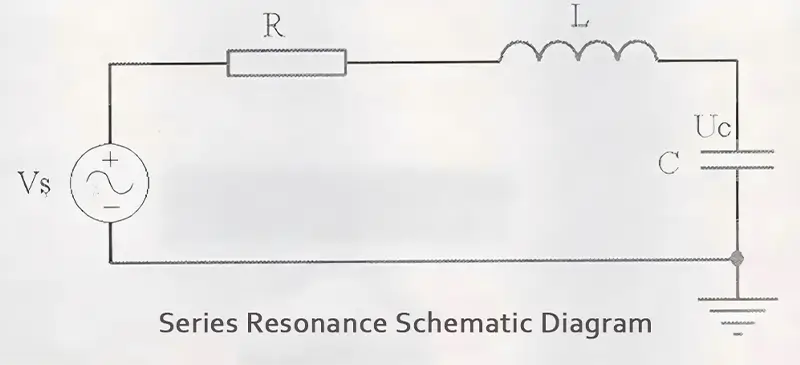
When the inductive reactance of the inductor (L) and the capacitive reactance of the capacitor (C) in an AC circuit are exactly equal in value, the total impedance of the circuit reaches its minimum and exhibits pure resistive characteristics. At this point, the current in the circuit will reach its maximum value.
It’s like pushing a swing: a gentle push at the “right moment” (the resonant frequency) as it swings back from its highest point can make it swing much higher (generating a high voltage).
In a variable frequency series resonant test system, we use a reactor (L) to compensate for the capacitance (Cₓ) of the test object (e.g., a cable, GIS), and precisely adjust the frequency with a variable frequency power source to bring the circuit into a state of resonance.
The advantages of using series resonance are obvious:
1. Greatly Reduced Power Supply Capacity: Compared to traditional methods, the power source only needs to supply the active power loss across the resistor R, not the reactive power for the entire capacitance. The required input power capacity is typically 1/10 to 1/30 of the test capacity.
2. Safe and Reliable: It features comprehensive protection for over-voltage, over-current, flashover (discharge), overheating, and zero-start. If the test object breaks down, the resonance condition is immediately disrupted, the high voltage disappears automatically, and the fault current drops sharply, effectively limiting the damage from the fault.
3. Excellent Waveform: The output test voltage is a perfect power-frequency sine wave with a waveform distortion rate below 1%, complying with all testing standards.
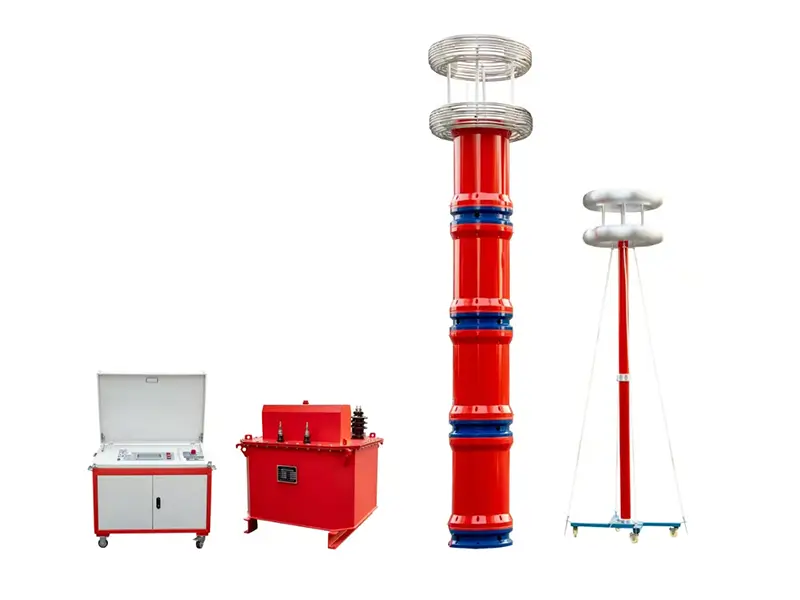
4. Portable and Efficient: The system adopts a modular design with lightweight individual components, making it easy to transport and assemble on-site, which greatly improves the efficiency of field testing.
Applications of Series Resonance: Withstand Testing for Key Power Equipment
Thanks to its outstanding performance, the variable frequency series resonant test system has been widely used in several key areas of the power system:
Power Cables: Especially suitable for acceptance and preventive withstand tests on large-capacity cross-linked polyethylene (XLPE) cables.
Gas-Insulated Switchgear (GIS): For withstand testing on new or post-maintenance GIS to effectively detect internal defects.
Generators and Power Transformers: For post-installation and post-overhaul induced voltage withstand tests on large generator sets and power transformers.
High-Voltage Switchgear, Instrument Transformers, Insulators, and Busbars: Suitable for evaluating the insulation performance of various high-voltage electrical equipment.
Choosing the Right Series Resonant Solution for Your Equipment
The variable frequency series resonant test system is a significant innovation in the field of modern power equipment insulation testing. With its superior performance, high efficiency, and reliable protection, it provides a solid foundation for the safe and stable operation of the power system.
If you are looking for an integrated solution to solve the challenges of withstand testing for large-capacity, high-voltage equipment, or if you have further questions and needs regarding our products, please feel free to contact us. Our professional team is dedicated to configuring a customized solution that best fits your testing needs!